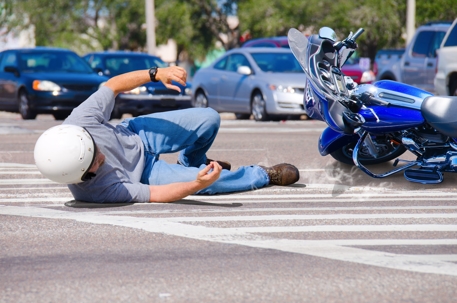
Fall is the most popular riding season in Western North Carolina, and it’s easy to understand why. Cool temperatures, clear skies, and a corridor of color stretching the entire length of the Blue Ridge Parkway draw thousands of riders every September and October. But here’s what most of those riders don’t know: the Parkway has the highest number of motorcycle crash injuries and fatalities of any unit in the entire National Park Service system. In 2023, Parkway rangers responded to approximately 394 motor vehicle crashes, and 83 of them involved motorcycles.
The National Park Service launched the Rule the Ridge safety campaign specifically because of those numbers. Fall traffic is a large part of why the crash count climbs. At Hensley Cloninger & Greer, P.C., we’ve spent more than 30 years representing injured riders and their families in Western North Carolina, and we’ve seen firsthand how a beautiful October ride can turn into a serious claim. This guide covers the specific hazards that make fall dangerous on these roads, the state statutes every rider needs to know, and the legal rule that can erase an otherwise valid claim if a single fault argument sticks.
Protect your rights after a crash on the Blue Ridge Parkway. Call Hensley Cloninger & Greer, P.C. today at (828) 383-8414 to discuss your case with our dedicated legal team.
Why Fall Riding Season Carries Extra Risk on the Blue Ridge Parkway
The foliage season here doesn’t behave the way most riders expect. Color begins at the Parkway’s highest elevations, above 6,000 feet near Richland Balsam, in late September. It doesn’t reach Asheville’s valley floor at roughly 2,134 feet until the last two weeks of October. That means peak sightseeing traffic moves down the mountain over approximately six weeks rather than one big weekend, and the Parkway carries heavy tourist volume the entire stretch.
Those sightseers are often driving passenger cars and SUVs unfamiliar with mountain roads. The Parkway’s posted speed limit runs as low as 25 mph through tight switchbacks and 45 mph on most other sections. Drivers routinely slow or stop entirely at overlooks with no warning, sometimes on curves where you don’t see them until you’re already committed. Sharing that road with an abruptly stopping vehicle on a 25 mph switchback, at the height of leaf season, is a materially different risk than a summer morning ride with light traffic.
Mountain Weather & Road Hazards Unique to This Season
The Parkway’s elevation change (sometimes 3,000 feet within a single hour of riding) creates conditions that don’t exist on valley roads. Plan for each of the following before every fall outing.
Mountain Fog at Higher Elevations
Early-morning fog at the Parkway’s upper elevations can reduce visibility to as little as 20 feet. That isn’t a figure pulled from a generic weather post; it’s a documented characteristic of the southern Appalachians in fall. Fog thins as the morning warms, but riders who hit the road at first light can encounter whiteout conditions at the same switchbacks where sightseers are already pulling over. If you’re planning a sunrise ride, check the forecast at the specific altitudes on your route, not the Asheville metro reading.
Wet Leaves & Hidden Debris
Fallen leaves present the traction hazard most riders know about, but location matters as much as presence. Leaves collect most heavily at intersections and shaded curves where sunlight doesn’t dry the pavement, precisely the spots where riders are already braking or leaning. They also hide loose gravel, cracked pavement edges, and road debris underneath. The problem isn’t just reduced grip; it’s reduced grip with an unknown surface below.
Wildlife During Dawn & Dusk
Deer, black bears, elk, and wild turkeys move most actively on the Parkway at dawn and dusk. Fall’s earlier sunsets push more riders onto the road in low light during exactly those windows. A deer strike on a mountain road at 40 mph isn’t a minor incident. Plan arrival and departure times around daylight, and build in stopping distance you might not need rather than margin you don’t have.
North Carolina Motorcycle Laws Every Rider Should Know
Two statutes carry the most practical weight for Asheville-area riders, and both affect how a claim gets evaluated after a crash.
Universal Helmet Requirement
Under N.C.G.S. 20-140.4, every motorcycle operator and passenger must wear a helmet meeting Federal Motor Vehicle Safety Standard 218 with a properly secured retention strap, regardless of age or experience. There are no exceptions for adults, license class, or years on the road. The statute does include one notable provision: a helmet argument alone won’t automatically bar your claim. But insurers still raise it in negotiations, so compliance matters for both safety and legal positioning.
Headlight-On Requirement
N.C.G.S. 20-129 requires at least one headlamp to be illuminated at all times a motorcycle is operated on a public road, day or night, regardless of weather conditions. This isn’t just good practice; it’s a statute, and a violation can be used to build a fault argument against you. On foggy mountain mornings and in the shaded canopy sections of the Parkway, a lit headlamp is also your best visibility tool.
North Carolina also prohibits lane splitting. Two motorcyclists can lawfully share a single lane side by side, but a motorcycle can’t move between lanes of traffic or between a lane and a parked vehicle. Keep that boundary clear, because a lane-splitting allegation (even an inaccurate one) is exactly the kind of detail an insurance adjuster will use under North Carolina’s fault rule.
The Fault Rule That Can Cost You Everything After a Crash
North Carolina is one of only five U.S. jurisdictions (along with Maryland, Virginia, Alabama, and Washington D.C.) still using pure contributory negligence. Under this doctrine, a rider found even one percent at fault for a crash can be completely barred from recovering any compensation, regardless of how badly they were injured or how reckless the other driver was. Most states use comparative fault systems that reduce an award proportionally. North Carolina doesn’t.
Insurance adjusters working claims in this state know that rule better than most riders do. They examine every available detail: lane position, speed, time of day, headlamp status, helmet condition, following distance, road familiarity. They’re searching for any arguable basis to assign you a share of the fault, because one finding is enough to close the claim entirely. It’s a standard tactic we’ve countered on behalf of clients for decades.
North Carolina also updated its minimum auto liability limits effective July 1, 2025. Policies issued or renewed on or after that date must carry at least 50/100/50 coverage, and uninsured and underinsured motorist coverage must match those minimums. On rural mountain roads where at-fault drivers often carry only minimum coverage, that underinsured motorist protection is the practical difference between a compensable claim and a judgment you can’t collect. Check your own policy now, before you need it.
Before Your Next Ride: A Fall-Specific Checklist
A pre-ride checklist for fall conditions on mountain roads looks different from a general seasonal reminder. Before any Parkway ride this fall, work through these points:
- Check elevation-specific forecasts, not valley readings, for fog and temperature at the highest point on your route
- Plan your start and end times to keep dawn and dusk transitions off the Parkway entirely if possible
- Treat shaded intersections and curves as slick by default during October, especially after overnight rain or morning dew
- Confirm your headlamp is on before pulling onto any public road, regardless of sky conditions
- Verify your helmet meets FMVSS 218 and that the retention strap is in serviceable condition
- Review your uninsured/underinsured motorist coverage against the new 50/100/50 minimums and adjust if needed
Fall on the Blue Ridge Parkway is genuinely one of the great riding experiences in the eastern United States. The crash data and North Carolina’s contributory negligence rule don’t change that, but they define the stakes when something goes wrong. Our founder, John C. Hensley Jr., built Hensley Cloninger & Greer, P.C. after working on the insurance side of these claims, which means we understand exactly how fault arguments get constructed against injured riders and how to counter them.
If you’re hurt in a motorcycle crash in the Asheville area and want to talk through what happened, reach us at (828) 383-8414.